De Levende Natuur nummer 4 van 2026 (English summary)
Afbeelding
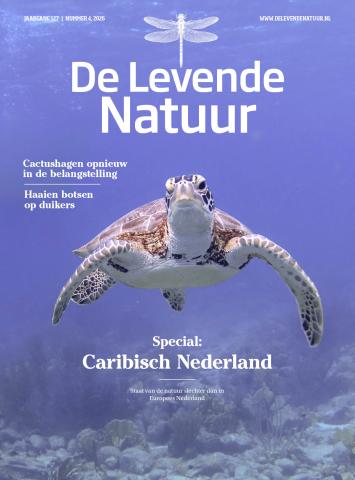
State of Nature Report of the Caribbean Netherlands
The Caribbean Netherlands is part of the Caribbean biodiversity hotspot, featuring approximately 130 (endemic) species found nowhere else on Earth and 143 internationally threatened species. The state of nature in the Caribbean Netherlands is poor (also in comparison to the EU) and is steadily declining. For coral reefs, the years of 2023-2024 were notably stressful and witnessed a large decline in both coral cover and diversity due to the combined effects of climate change and coral disease.
The primary threats to terrestrial nature are overgrazing by free-roaming livestock, invasive species, and climate change. For coral reefs, the main threats are climate change, water pollution, and overfishing, while for mangroves it is sedimentation (silting) and for seagrass additionally trampling from unrestrained recreation. Due to the already significantly reduced resilience of nature, active and “nature-based” interventions are especially necessary to halt the decline.
Coral amnesia
The coral reef around Bonaire was once one of the most beautiful reefs in the world. Since then, pollution and disease have severely damaged the reefs. If we forget what it once looked like, the urgency of this problem will not get through to the general public or to policymakers.
Restoration of coral reefs and mangroves at Aruba
The Caribbean region has a high level of marine biodiversity, but is also under severe pressure. The coral reefs here have deteriorated significantly over the past few decades. Aruba is no exception: the quality and extent of the coral reefs and mangrove areas have declined considerably. The pilot Project Turning the Tide tries to restore both ecosystems by constructing artificial reefs and improving the hydrological conditions in the mangroves. The initial results are encouraging and show that active restoration using measures that utilise and promote natural processes can turn the tide.
Bonaire: Goats out, trees in
On many islands, including those in the Caribbean, mammals that were once introduced have radically altered the vegetation. Long-term grazing by feral goats prevents key plants such as columnar cacti from regenerating and spreading, with consequences for birds, reptiles and bats. On Bonaire, it is clearly evident how such processes can shape an island’s vegetation and how restoration is possible.