De Levende Natuur nummer 5 van 2026 (English summary)
Afbeelding
Cover 5
The delayed effects of acidification in the Gerritsfles, a Dutch moorland pool on the Veluwe
The Gerritsfles is a moorland pool on the Veluwe with characteristic species such as Sphagum mosses, Sparganium angustifolium and Leucorrhinia rubicunda. This pool is part of a monitoring network. Water level, water chemistry and diatoms have been measured yearly since 1978 and aquatic invertebrates since 2008. Vegetation has also been investigated once in a while since 1950. We combined this data with additional fieldwork in a landscape ecological systemanalysis and showed that 1) the stagnative podzol has been expanding, resulting in a 30 cm increase in water level between 2001-2016. 2) Water chemistry and diatoms recovered from the acid deposition, but vegetation gradients with weakly buffered species disappeared and peat formation locally expanded. 3) Recent droughts triggered temporary changes in water chemistry most notably a decrease in pH, and 4) aquatic invertebrate density rapidly decreased between 2008-2023, especially groups that breathe underwater, likely due to oxygen stress caused by decomposition of organic material on the bottom of the pool.
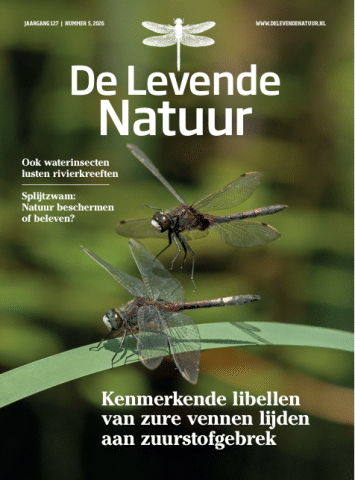
Dragonflies characteristic of acidic moorlands suffer from a lack of oxygen
Dutch acidic moorland pools are biodiversity hotspots, but their characteristic dragonflies such as the Irish damselfly, northern white-faced darter and black darter have declined dramatically since 2010. This study investigated why. Measurements on oxygen consumptions of dragonfly larvae show that some of these species require high oxygen availability especially when the water becomes warmer. Another experiment showed that reduced acidity and warmer water increase oxygen consumption in organic sediments, leaving less oxygen for aquatic life. Field surveys found that pools where species disappeared often had signs of higher biological activity in the sediment. Dragonfly larvae selected shallow, well-oxygenated microhabitats. The findings suggest that warming and recovery from acidification together reduce oxygen availability, contributing to biodiversity loss. Management should therefore focus on improving oxygen conditions by selectively removing organic sediment, increasing wind exposure, restoring hydrology, and prioritizing the conservation of remaining strongholds through targeted management and long-term ecological monitoring.
Aquatic insects feed on crayfish
Invasive crayfish are a major threat to freshwater biodiversity, ecosystem functioning, and water quality. While management mainly targets adult crayfish, little is known about the role of native aquatic invertebrates in controlling juvenile crayfish. Research was conducted to investigate the predation potential of seven native macroinvertebrate taxa on juvenile red swamp crayfish (Procambarus clarkii) under field conditions. All tested taxa showed predatory behaviour, although success rates varied considerably. Emperor dragonfly larvae (Anax spp.) were the most effective predators, with successful 46% predation interactions. Based on field densities, predation by dragonfly larvae alone could remove approximately 300 juvenile crayfish per 100 m of shoreline annually, with substantially higher reductions possible in restored, vegetation-rich systems where dragonfly densities increase. These findings suggest that native macroinvertebrates may contribute to the natural suppression of invasive crayfish populations and highlight the importance of habitat restoration as part of an integrated management strategy.